Film openings and trailers vastly differ to one another, they are composed, produced and presented very differently, their intent and purposes contrast each others...
The purpose of film trailers is to hook the audience, they make the film appear as enticing, dramatic and thrilling as they can, this is done through heavy amounts of editing, and the shots are usually cut so that they fit a sequence of music, which will usually build tension and lead to a cliff hanger climax.
Usually a montage editing technique is used, portraying a series of the film's most significant and dramatic scenes, which will effectively excite the audience and hold their attention. This technique will also allow for the basic plot of the film to be outlined so the audience can decide whether they believe they will enjoy the story line.
Conversely, film opening's purposes are predominately to give the audience an introduction to the film and story line, this will be done by conveying the location, the protagonists and antagonists. The genre/mood of the film is usually conveyed through establishing shots, location, lighting and music. Film openings often create tension and mystery, hoping that this will cause the audience to want to continue watching.
Producers use teaser trailers to tease their potential audience, they are usually realised months before the official film release, which creates anticipation and entices the audience and leaves them wanting more. Whereas a theatrical trailer - which is released later in the filming/production process is more in depth and starts to create a sense of story and plot.
The most evident difference between a teaser and theatrical trailer is the length. A teaser trailer is usually under 2 minutes, whereas theatrical trailers are under 3 minutes. A teaser creates more mystery as at the point of production there is usually not enough footage to create a theatrical, therefore there is a lot less footage to work with and present to the audience.
Both teaser and theatrical trailers usually place a lot of focus onto the famous actors in the film, to gain an immediate interest from the audience.
-Most theatrical trailers last around two to three minutes and contain key moments from the film but do not give away any crucial plot lines or details.
-A film trailer will usually begin with the film production's logo, as the company's reputation can influence a viewers opinion on whether they want to see the film or not. The logo is also used to make the audience aware of what type/genre film it is. This is usually done to attract and entice the audience.
-The title of the film is not usual presented on screen until the end of until the end of the trailer, which is usually followed by a release date. This is usually done to built anticipation and excitement, and so that the title will be remembered. The graphological features of the title, such as the colour, font, and backdrop, often indicate the genre and type of film it will be. For example, the comedy film title 'Guys With Kids' is bright, bold and colourful to emphasise its comedic qualities, whereas the horror movie title 'Insidious' is dark, sharp and red, which connotes evil, death, blood and horror.
-The names of the main actors are often presented on screen to the audience very early on in the trailer, as this lets them know who they expect to see in the film. This is an important aspect as often a viewer will decide whether or not to watch the film depending on who the actors in it are.
-An important aspect of a theatrical trailer is the introduction of the characters, as a vital part of a film is to get the audience to connect with and like the main characters.
-Editors usually include short clips from different parts in the film - this is done to give the audience a sense of the story line, while keeping it fragmented enough to not reveal too much. Often as the trailer cuts from clip to clip each one transitions with a fade to black, this helps its continuity and ensures it flows.
-A popular sound choice found in trailers is a voice over, this clearly expresses the basic plot line to the audience and gives them an insight into what the whole film will consist of. It immediately creates an introduction to the protagonist and allows the audience to get a feel of what the film will be like, whether that is comedic, thrilling, emotional etc.
-Commonly the name of the director or producer and their most successful film title will appear onscreen and read for example 'from the director of...[insert successful film title]'
-The most common camera framing found in trailers are close ups, to explore intense emotion, long shots to highlight action, and extreme long shots to present the location. The close ups and long shots help to build the tension and excitement and would portray the most action packed/emotional clips. The extreme long shots would add to the narrative.
Saw is an incredibly popular horror franchise, which is distributed by Lions Gate Entertainment, and produced by Twisted Pictures. The franchise consists of seven films and additional media, including a short film and roller coasters. Collectively, the films grossed over $873 million, at the box office, worldwide, and the trailers are a huge factor in making these films so appealing and successful.
The editing used for the trailer is very effective and important, the use of jump cuts produces an almost montage effect, which creates the sense that everything is moving very quickly. This is seen in sequences such as the clip below...
Additionally, the speed makes the film appear very dramatic and full of action, this hooks the audience and captivates them, not allowing them to look away or get bored.
This fast pace is used to create fear and helplessness in the audience, as the horror is intimidatingly flashed up on the screen before them, yet is gone again so quickly they cannot react to it.
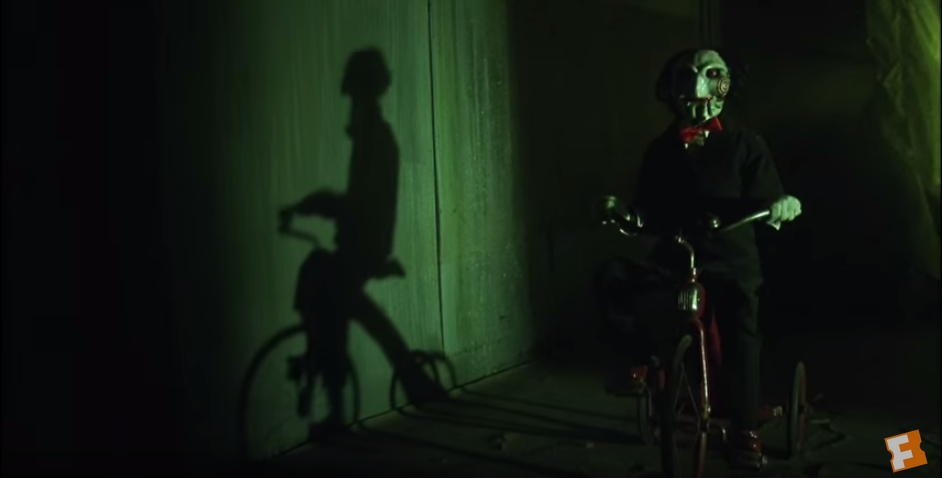
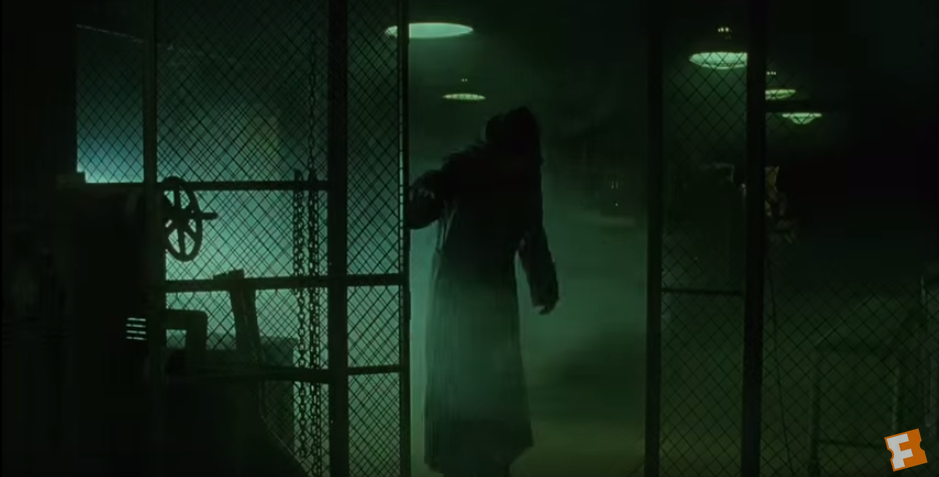
The most predominant use colours throughout this trailer are dark blue/green and red. In most scenes and in the typography the scene is tinted with a blue/green wash and contrasted with dark shadowing around the edge of the scene.
This creates a depressive atmosphere and a sense of coldness, emptiness and helplessness.
Several scenes that flash up throughout this trailer are full of red, this is done to create fear and connote danger and death. Death is also signified through the blacked out scenes and the use of low key lighting and darkness. All of these lighting affects are done to create fear in the audience and to hook them.
Throughout this trailer, the original non-diegtic Saw theme song is playing, this is recognisable as the Saw theme song to this franchise's fans, therefore this will attract their attention. This song also creates tension and fear, it builds up and is very fast paced throughout, making the audience feel fear, anticipation and it creates a dramatic and tense atmosphere. The diegtic sound of screaming and Jigsaw (the antagonist) speaking, this again creates fear and captivates fans of horror films. (Play sound on clips to hear examples)